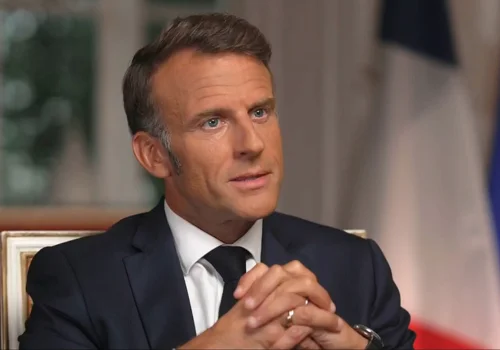
How Emmanuel Macron Became France’s Young Leader
Quick Biography
| Information | Details |
|---|---|
| Full Name | Emmanuel Jean-Michel Frédéric Macron |
| Nickname | Macron |
| Gender | Male |
| Age | 48 (as of 2026) |
| Date of Birth | December 21, 1977 |
| Profession | Politician, Former Investment Banker, Civil Servant |
| Nationality | French |
| Birth Place | Amiens, France |
| Religion | Raised in a Christian family |
| Political Party | Renaissance (formerly La République En Marche!) |
| Spouse | Brigitte Macron |
| Education | University of Paris Nanterre, Sciences Po, ENA |
| Current Position | President of France |
Introduction
Emmanuel Macron’s rise to the highest office in France is one of the most remarkable political stories of the 21st century. At a time when many political leaders spend decades climbing through party structures, Macron took a different path. He moved from public service to banking, entered politics, launched his own movement, and became President of France at just 39 years old.
His journey attracted attention not only in France but across the world. Many people viewed him as a symbol of a new generation of leadership. His success showed that political change can happen quickly when voters are looking for fresh ideas and new faces.
Today, Macron is one of Europe’s most influential leaders. His story combines ambition, education, determination, and strategic thinking. This article explores how Emmanuel Macron became France’s young leader and why his political journey remains significant.
Early Life and Childhood


Emmanuel Macron was born on December 21, 1977, in Amiens, a city located in northern France. He grew up in a highly educated family. His father worked as a professor of neurology, while his mother was a physician.
From an early age, Macron showed a strong interest in reading, history, literature, and public affairs. Teachers often described him as intelligent, disciplined, and curious. Unlike many children his age, he enjoyed discussing ideas and exploring complex subjects.
His family encouraged education and critical thinking.
Macron’s childhood was relatively comfortable, but he was also taught the importance of hard work and personal achievement. These values would remain central throughout his life.
Education and Academic Excellence
Education played a major role in Macron’s journey to leadership.
He attended some of France’s most respected institutions and built a reputation as an outstanding student. His academic success opened doors to opportunities that eventually led him into public service and politics.
Macron studied philosophy before moving into political science and public administration. His studies helped him understand economics, government systems, and social issues.
Educational Background
| Institution | Area of Study |
|---|---|
| University of Paris Nanterre | Philosophy |
| Sciences Po Paris | Political Science |
| École Nationale d’Administration (ENA) | Public Administration |
The École Nationale d’Administration, often known as ENA, is one of France’s most prestigious schools. Many French presidents, prime ministers, and senior government officials have graduated from this institution.
His education gave him a deep understanding of how governments function and how policies affect society.
Beginning a Career in Public Service
After completing his education, Macron joined the French civil service.
He worked as a government inspector, analyzing economic policies and public institutions. This role allowed him to understand the inner workings of government and gain practical experience in administration.
His work involved evaluating public programs, reviewing government spending, and studying economic performance.
During this period, Macron developed strong analytical skills and learned how policy decisions impact citizens, businesses, and the national economy.
Many observers believe this experience provided him with the technical knowledge that later helped him as a political leader.
Success in Investment Banking


One of the most unusual aspects of Macron’s career was his move from public service into investment banking.
He joined Rothschild & Co., one of France’s most respected financial institutions. There, he worked on major financial transactions and quickly earned a reputation as a talented banker.
His success in the banking sector brought him financial security and increased his visibility within business circles.
The experience also gave him valuable insights into:
- International markets
- Corporate decision-making
- Economic development
- Global trade
- Investment strategies
This knowledge later influenced many of his economic policies as president.
Unlike many politicians who spend their entire careers in government, Macron entered politics with experience from both the public and private sectors.
Entering National Politics
Macron officially entered national politics during the presidency of François Hollande.
He first worked as an advisor before being appointed Minister of the Economy, Industry, and Digital Affairs in 2014.
As Economy Minister, he promoted reforms designed to improve competitiveness and encourage economic growth.
Some people supported his ideas, believing France needed modernization. Others criticized him for being too focused on business interests.
Regardless of differing opinions, his public profile grew rapidly.
He became known as an energetic politician who was willing to challenge traditional political thinking.
Creating a New Political Movement


In 2016, Macron made a bold decision that changed French politics.
Instead of seeking leadership within an existing major political party, he created his own political movement called “En Marche!” which translates to “Forward!”
This decision surprised many political experts.
Most successful politicians spend years building influence inside established parties. Macron chose a completely different approach.
His movement focused on:
| Core Principle | Objective |
|---|---|
| Economic Reform | Improve competitiveness |
| Innovation | Support modern industries |
| European Cooperation | Strengthen EU partnerships |
| Political Renewal | Modernize government |
| Opportunity | Expand economic growth |
The movement quickly attracted supporters from various political backgrounds.
Many voters felt frustrated with traditional parties and were eager for change.
Macron’s message of optimism and modernization resonated particularly well with younger voters.
The 2017 Presidential Campaign
The 2017 presidential election became one of the most important events in Macron’s life.
France was experiencing political uncertainty, and many citizens were dissatisfied with the traditional political establishment.
Macron presented himself as a candidate who could bridge divisions between left-wing and right-wing politics.
His campaign emphasized:
- Economic modernization
- Job creation
- Education reform
- European cooperation
- Government efficiency
Unlike many politicians, Macron focused on a positive message rather than attacking opponents.
His speeches often highlighted the potential for progress and national renewal.
As the campaign continued, support for Macron grew steadily across the country.
Becoming France’s Youngest President


In May 2017, Emmanuel Macron won the French presidential election.
At only 39 years old, he became the youngest president in the history of modern France.
His victory shocked many observers because he had created his political movement only a short time earlier.
The election demonstrated that voters were willing to support a candidate outside the traditional party system.
Many people viewed Macron as a symbol of generational change.
His success also highlighted the growing importance of communication, digital campaigning, and direct voter engagement in modern politics.
The world watched closely as France welcomed its youngest leader.
Leadership Style and Communication
One of Macron’s greatest strengths is his communication ability.
Throughout his career, he has shown a talent for explaining complex issues in a way that many citizens can understand.
His leadership style is often described as:
- Confident
- Energetic
- Intellectual
- Reform-oriented
- Internationally focused
Macron frequently engages with journalists, citizens, business leaders, and international organizations.
His speeches often focus on long-term goals and national progress.
Supporters praise his vision and determination, while critics sometimes argue that his approach can appear overly ambitious.
Regardless of political opinions, communication has been one of the key factors behind his success.
Challenges During His Presidency


Like all political leaders, Macron has faced significant challenges.
The Yellow Vest Movement
One of the biggest domestic challenges came from the Yellow Vest protests.
Many citizens expressed concerns about fuel costs, taxation, and economic inequality.
The protests became a major test of Macron’s leadership and ability to respond to public dissatisfaction.
The COVID-19 Pandemic
The global pandemic created unprecedented challenges for governments around the world.
Macron’s administration implemented measures designed to protect public health while supporting businesses and workers.
Economic Pressures
France, like many countries, has faced inflation, economic uncertainty, and changing global market conditions.
Managing these issues has required difficult policy decisions.
Macron’s Influence in Europe
Macron has become one of the most influential voices within Europe.
He strongly supports European cooperation and believes countries can achieve more through collective action.
His international priorities often include:
| Area | Focus |
|---|---|
| European Union | Stronger integration |
| Climate Change | Environmental action |
| Security | Regional stability |
| Technology | Innovation and development |
| Trade | Economic growth |
His influence extends far beyond France.
Many international leaders look to Macron when discussing the future direction of Europe.
Interesting Facts About Emmanuel Macron
| Fact | Details |
|---|---|
| Birth Year | 1977 |
| Birth City | Amiens |
| Previous Profession | Investment Banker |
| Youngest French President | Yes |
| First Elected President | 2017 |
| Political Movement | En Marche! |
| Languages | French and English |
| International Role | Major European Leader |
Why Macron’s Rise Was Unique
Macron’s rise to power was different from that of most political leaders.
Several factors contributed to his success:
Strong Educational Foundation
His studies provided expertise in government, economics, and public policy.
Diverse Professional Experience
Unlike many politicians, he gained experience in both public service and business.
Effective Communication
Macron demonstrated an ability to connect with different groups of voters.
Political Innovation
Creating his own movement allowed him to attract support from people across the political spectrum.
Public Desire for Change
Many French citizens were searching for alternatives to traditional political parties.
Together, these factors helped transform Macron from a government official into the leader of France.
Legacy and Long-Term Impact
Historians will continue to debate Macron’s long-term legacy.
Supporters praise his efforts to modernize France, strengthen European cooperation, and promote economic reforms.
Critics point to protests, political controversies, and policy disagreements.
However, there is little doubt that Macron changed the landscape of French politics.
His success demonstrated that a new political movement could challenge established parties and achieve national victory.
Future political leaders may study his campaign strategy and leadership style for years to come.
Conclusion
The story of Emmanuel Macron is one of ambition, education, and determination.
Born in Amiens and educated at France’s top institutions, he built a career in public service and banking before entering politics. Rather than following a traditional path, he created his own political movement and successfully challenged established political structures.
His election as France’s youngest president marked a historic moment in French politics and attracted worldwide attention.
Whether people agree or disagree with his policies, Macron’s journey remains one of the most fascinating political success stories in modern Europe. His rise shows how vision, preparation, communication, and timing can combine to create extraordinary leadership opportunities.