Narendra Modi India’s Leadership Story
| Detail | Information |
|---|---|
| Nickname | Modi Ji |
| Gender | Male |
| Age | 75 years (as of 2026) |
| Date of Birth (DOB) | 17 September 1950 |
| Profession | Politician, Prime Minister |
| Nationality | Indian |
| Birth Place | Vadnagar, Gujarat, India |
| Religion | Hinduism |
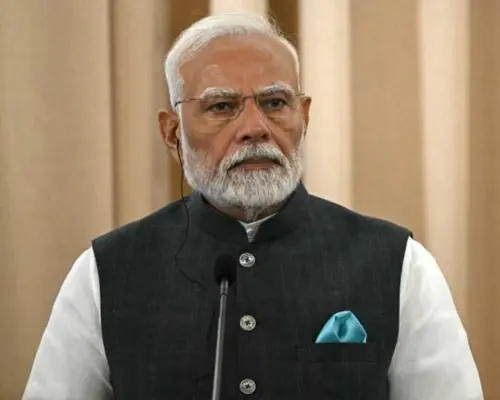
Narendra Modi is one of the most influential political leaders in modern India. Known for his strong leadership style, communication skills, and large-scale development policies, he has played a major role in shaping India’s political and economic direction.
From a small tea-selling background to becoming the Prime Minister of the world’s largest democracy, his journey is often described as a story of discipline, ambition, and determination.
Early Life and Background
Narendra Modi was born on September 17 1950, in Vadnagar, Gujarat, India. He came from a modest family where his father ran a tea stall at a railway station.
During his childhood, he helped his father and later started selling tea himself. Despite financial struggles, he was known for being disciplined and hardworking.


From a young age, he showed interest in public speaking and social service.
Entry into Politics
Narendra Modi joined the Rashtriya Swayamsevak Sangh (RSS) during his youth, where he learned organizational and leadership skills.
Later, he became a member of the Bharatiya Janata Party (BJP), which marked the beginning of his formal political journey.
He worked in different roles within the party and slowly gained recognition for his dedication and discipline.
Rise as Chief Minister of Gujarat
In 2001, Narendra Modi became the Chief Minister of Gujarat. This was a turning point in his political career.


During his time as Chief Minister:
- Gujarat saw rapid industrial growth
- Infrastructure development increased
- Investment from global companies improved
- Focus on electricity and rural development increased
His leadership style gained national attention.
Becoming Prime Minister of India
In 2014, Narendra Modi became the Prime Minister of India after a historic election victory.
He was re-elected in 2019 and again continued his leadership with strong public support.
His campaigns focused on development, anti-corruption, and economic growth.
Major Policies and Initiatives
Narendra Modi introduced several important national programs:
- Swachh Bharat Abhiyan (Clean India Mission)
- Make in India (Boost manufacturing)
- Digital India (Technology and internet expansion)
- Jan Dhan Yojana (Financial inclusion for poor)
- Aatmanirbhar Bharat (Self-reliant India initiative)


These programs aimed to modernize India and improve living standards.
Leadership Style
Narendra Modi is known for:
- Strong decision-making
- Direct communication with citizens
- Use of social media for outreach
- Focus on national development
He often addresses the public through radio program Mann Ki Baat, where he discusses social issues and public welfare.
Achievements and Impact
Under his leadership:
- India expanded its digital infrastructure
- Foreign investment increased
- Welfare schemes reached millions of citizens
- India gained stronger global presence
He is often recognized as a leader who focuses on long-term national development goals.
Challenges and Criticism
Like any major political leader, Narendra Modi has also faced criticism and challenges, including:
- Economic policy debates
- Social and political controversies
- Public protests on certain reforms
- Global diplomatic challenges
Despite this, he continues to remain a central figure in Indian politics.
Personal Life
Narendra Modi keeps his personal life very private. He is known for a disciplined lifestyle, simple habits, and strong work ethic.


He is also interested in yoga and meditation, which he promotes internationally.
Conclusion
Narendra Modi is a major political figure whose journey from humble beginnings to the highest office in India is widely discussed around the world. His leadership has significantly influenced India’s development path, both domestically and globally.
Whether admired or criticized, his impact on modern Indian politics is undeniable, and his story continues to shape the future of the country.