The Leadership Journey of Steve Jobs
Quick Biography
| Information | Details |
|---|---|
| Full Name | Steven Paul Jobs |
| Nickname | Steve Jobs |
| Gender | Male |
| Age | Passed away at age 56 |
| Date of Birth | February 24, 1955 |
| Date of Death | October 5, 2011 |
| Profession | Entrepreneur, Business Leader, Inventor |
| Nationality | American |
| Birth Place | San Francisco, California, United States |
| Religion | Explored Buddhism and Spiritual Philosophy |
| Education | Reed College (Attended, Did Not Graduate) |
| Famous For | Co-founding Apple Inc. |
| Companies | Apple, NeXT, Pixar |
| Industry | Technology |
Introduction
Steve Jobs is widely regarded as one of the most influential business leaders and innovators in modern history. As the co-founder of Apple, he helped transform personal computing, mobile technology, digital entertainment, and communication.
His leadership journey was far from smooth. He experienced incredible successes, major setbacks, and dramatic comebacks throughout his career. Yet each challenge helped shape the visionary leader he became.
Today, his influence can be seen in the smartphones, computers, tablets, and digital services used by millions of people worldwide.
This article explores the leadership journey of Steve Jobs and the lessons that continue to inspire entrepreneurs, innovators, and business leaders around the world.
Early Life and Childhood


Steve Jobs was born on February 24, 1955, in San Francisco, California.
Shortly after birth, he was adopted by Paul and Clara Jobs, who raised him in California.
His father worked as a mechanic and taught Steve how to repair and build things with his hands.
These early experiences helped develop his curiosity and interest in technology.
As a child, Jobs enjoyed exploring electronics and understanding how machines worked.
He grew up during a period when technological innovation was rapidly expanding, which further fueled his fascination with computers.
Many of the qualities that later defined his leadership—curiosity, creativity, and determination—were visible from an early age.
Education and Early Influences
Jobs attended school in California and showed strong intellectual curiosity.
However, he left college after only a short period.
Despite dropping out, he continued attending classes that interested him.
One of the most influential subjects he explored was calligraphy.
At the time, it seemed unrelated to technology.
Years later, however, his appreciation for typography and design influenced the visual appearance of Apple computers.
Educational Background
| Institution | Focus |
|---|---|
| Homestead High School | Secondary Education |
| Reed College | Liberal Arts Studies |
| Independent Learning | Design and Creativity |
This experience reinforced an important lesson: knowledge from unexpected areas can become valuable in the future.
Discovering a Passion for Technology


During his youth, Steve Jobs met Steve Wozniak, an exceptionally talented engineer.
The two shared a passion for electronics and innovation.
Together, they experimented with technology and explored new ideas.
Their partnership would eventually lead to one of the most important companies in technology history.
Jobs possessed strong vision and marketing instincts, while Wozniak excelled at engineering and product development.
Their complementary skills created a powerful combination.
This partnership laid the foundation for Apple’s future success.
Founding Apple
One of the most important moments in Jobs’ life occurred when he co-founded Apple in 1976.
The company began in a modest garage but quickly attracted attention due to its innovative products.
Apple’s goal was to make computers accessible to ordinary people.
At the time, computers were often viewed as tools for businesses and technical experts.
Jobs believed technology should be intuitive, attractive, and easy to use.
Early Apple Milestones
| Year | Achievement |
|---|---|
| 1976 | Apple Founded |
| 1977 | Apple II Released |
| Early 1980s | Rapid Company Growth |
| 1984 | Macintosh Launch |
These achievements transformed Apple into one of the fastest-growing technology companies in the world.
The Macintosh Revolution


In 1984, Apple introduced the Macintosh.
The Macintosh represented a major step forward in personal computing.
Unlike many computers of the time, it emphasized simplicity, graphical interfaces, and user-friendly design.
Jobs believed technology should be approachable and visually appealing.
The Macintosh reflected this philosophy.
Although not an immediate commercial success on the scale Apple hoped for, it significantly influenced the future of computing.
Many modern computer interfaces trace their origins back to concepts introduced by the Macintosh.
Leadership Challenges at Apple
Success did not eliminate challenges.
As Apple expanded, disagreements emerged regarding the company’s direction and management.
He pushed employees to achieve extraordinary results and expected excellence in every detail.
While many admired his passion, others found his approach difficult.
Eventually, internal conflicts led to a dramatic turning point in his career.
Leaving Apple


In 1985, Steve Jobs left Apple.
For many people, being removed from the company they helped create would have been devastating.
However, Jobs viewed the experience as an opportunity to start again.
Later in life, he described this period as one of the most important experiences of his career.
It taught him valuable lessons about leadership, resilience, and innovation.
This chapter demonstrated his ability to recover from failure and continue moving forward.
Creating NeXT
After leaving Apple, Jobs founded a new company called NeXT.
NeXT focused on developing advanced computer systems and software.
Although the company never achieved the same commercial success as Apple, it produced important technological innovations.
Many of the technologies developed at NeXT later played a crucial role in Apple’s future.
Lessons From NeXT
| Area | Contribution |
|---|---|
| Software Development | Advanced Systems |
| Leadership Growth | Management Experience |
| Innovation | New Technologies |
| Product Design | Improved Standards |
NeXT allowed Jobs to refine his leadership skills and gain valuable experience.
The Pixar Success Story


Another major chapter in Jobs’ leadership journey involved Pixar.
He acquired and supported the animation company during its early years.
Pixar eventually revolutionized animated filmmaking.
Its films combined storytelling, creativity, and technological innovation.
Movies such as Toy Story became global successes.
Pixar demonstrated that Jobs’ leadership abilities extended beyond computers and technology.
His support helped transform Pixar into one of the world’s most respected entertainment companies.
Returning to Apple
One of the most remarkable business comebacks in history occurred when Steve Jobs returned to Apple in the late 1990s.
At the time, Apple was facing significant challenges.
The company struggled financially and lacked a clear strategic direction.
Jobs quickly implemented major changes.
He simplified product lines, improved design standards, and focused on innovation.
His return marked the beginning of Apple’s transformation into one of the world’s most valuable companies.
Transforming Apple


Under Jobs’ leadership, Apple introduced several revolutionary products.
Major Product Launches
| Product | Impact |
|---|---|
| iMac | Revitalized Apple |
| iPod | Changed Music Industry |
| iTunes | Digital Music Revolution |
| iPhone | Transformed Communication |
| iPad | Created New Product Category |
These products reshaped entire industries and established Apple as a global leader.
Jobs’ ability to combine technology, design, and user experience became one of his greatest strengths.
Leadership Philosophy
Several principles defined Steve Jobs’ leadership style.
Focus
He believed companies should concentrate on a small number of priorities.
Excellence
Jobs consistently demanded high standards.
Innovation
He encouraged teams to think differently.
Simplicity
Products should be easy to use.
Customer Experience
Every detail mattered.
These principles influenced not only Apple but also countless organizations around the world.
Communication and Product Launches


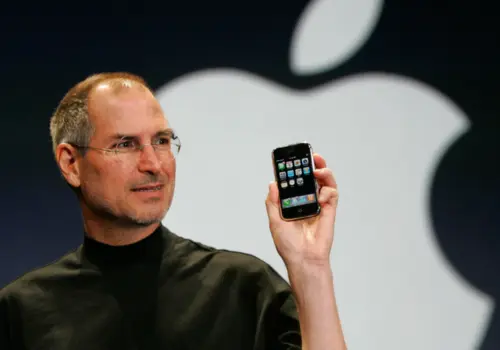
Jobs became famous for his product presentations.
His keynote events attracted global attention.
He had an exceptional ability to explain technology in simple, exciting ways.
Rather than focusing on technical specifications alone, he highlighted how products could improve people’s lives.
This communication style helped build strong emotional connections with customers.
Many business leaders continue studying his presentation techniques today.
Challenges and Criticism
Despite his achievements, Jobs was not without critics.
Some people viewed his management style as overly demanding.
Others questioned certain business decisions.
However, even critics often acknowledged his extraordinary vision and ability to inspire innovation.
His career demonstrates that leadership is rarely perfect.
Great leaders often face criticism while pursuing ambitious goals.
Jobs’ willingness to make difficult decisions contributed significantly to his success.
Interesting Facts About Steve Jobs
| Fact | Details |
|---|---|
| Birth Year | 1955 |
| Apple Founded | 1976 |
| College | Reed College |
| Other Companies | NeXT, Pixar |
| Famous Product | iPhone |
| Leadership Style | Visionary and Demanding |
| Industry | Technology |
| Legacy | Global Innovation Leader |
Leadership Lessons From Steve Jobs
There are many valuable lessons from Jobs’ journey.
Think Differently
Innovation often begins with challenging conventional ideas.
Learn From Failure
Setbacks can become opportunities for growth.
Focus on Quality
Attention to detail creates exceptional products.
Stay Curious
Learning never stops.
Pursue Excellence
High standards lead to extraordinary results.
These lessons continue to influence entrepreneurs worldwide.
Legacy and Lasting Impact


Steve Jobs passed away on October 5, 2011, but his influence remains powerful.
His innovations changed how people communicate, work, learn, and entertain themselves.
Products developed under his leadership continue to affect billions of people globally.
Beyond technology, Jobs inspired generations of entrepreneurs to pursue bold ideas and challenge established industries.
His leadership journey remains one of the most studied and admired stories in business history.
Conclusion
The leadership journey of Steve Jobs is a story of vision, persistence, innovation, and transformation.
From a curious young technology enthusiast to the co-founder of Apple and one of the world’s most influential business leaders, Jobs continually pushed the boundaries of what was possible.
His career included remarkable successes, painful setbacks, and one of the greatest comebacks in corporate history.
Through companies such as Apple, NeXT, and Pixar, he demonstrated how creativity and determination can reshape entire industries.
Today, Steve Jobs is remembered not only as a technology pioneer but also as a leader whose ideas changed the world.
His journey continues to inspire entrepreneurs, innovators, and dreamers who strive to create products and ideas that make a lasting impact on society